Product Center
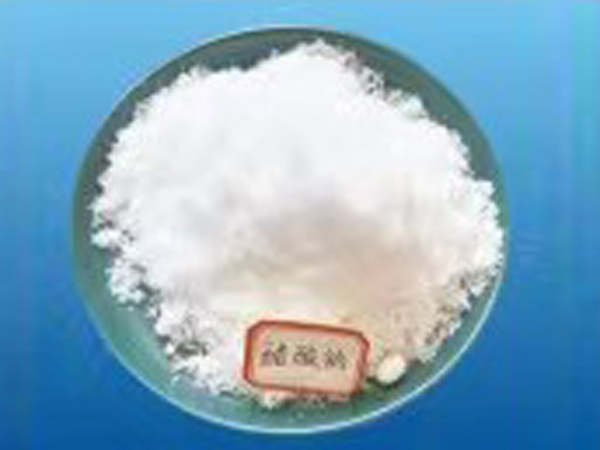
Sodium acetate
Product Overview:
Category:
Keywords:
Contact us:
Product Details
Key features of sodium acetate:
Sodium acetate, also known as ethanoic acid sodium, has a molecular formula of CH3COONa (anhydrous) and is abbreviated as NaAc. It is a colorless, odorless crystalline solid, non-toxic, and hygroscopic. When exposed to humid air, it easily deliquesces, and when exposed to dry air, it easily deteriorates, becoming a white powder. It is combustible. Trihydrate sodium acetate is readily soluble in water and diethyl ether, slightly soluble in ethanol, and its aqueous solution is weakly alkaline. Sodium acetate is primarily used in the textile printing and dyeing industry, meat preservation, pharmaceuticals, photography, electroplating, chemical reagents, and organic synthesis, demonstrating significant market potential. Industrially, it is often used in bio-fermentation systems to enhance microbial activity and adjust the pH of bioreactors.
Applications of Sodium Acetate:
Used for the determination of lead, zinc, aluminum, iron, boron, molybdenum, nickel, and tin; as a complexing stabilizer, an adjuvant for the ethylation process, a buffer, a desiccant, and a mordant. Also used as an enzymatic catalyst in organic synthesis, as well as in photographic chemicals, pharmaceuticals, textile dyeing mordants, buffers, chemical reagents, meat preservatives, pigments, and tanning agents. Specifically, it can be used as a buffer, flavoring agent, fragrance enhancer, and pH regulator. As a buffer in flavoring agents, it can mitigate unpleasant odors, prevent discoloration, and improve flavor. It can also be used as an anti-scorching agent in the sulfur-regulated curing of chloroprene rubber, typically at a dosage of 0.5 parts by mass, and can also be used as a crosslinking agent for animal glue.
Sodium acetate as a supplementary carbon source:
Enrich the water with organic carbon to stabilize the balance of aquatic flora and fauna and maintain a stable pH level. The product contains fermented proteins, amino acids, and reducing sugars that promote the growth and reproduction of beneficial algae and microorganisms, thereby stabilizing water clarity. It utilizes sulfates in the water to participate in photosynthesis and respiration, inhibiting the formation of cyanobacterial toxins. Rich in humic acid, it possesses strong complexing, integrating, and surface adsorption capabilities, loosening the sediment and effectively removing ammonia nitrogen from the water.
Packaging options:
This product is packaged in a double-layered, hermetically sealed container. The inner layer consists of a non-toxic polyethylene plastic bag, which is then placed inside a woven bag. Each bag has a net weight of 25 kg.
Leave a message online.
Address: Group 6, Shuidi River Village, Beigou Town, Gongyi City, Henan Province.
Phone: +86 18695835889 / +86 15517588719
Scan the QR code to add us on WeChat.