SEO
Water Treatment Chemicals
Keywords:
Cationic polyacrylamide exhibits a positive charge in both acidic and alkaline environments. It typically has a lower molecular weight compared to anionic or non-ionic polyacrylamide. Its ability to clarify wastewater is primarily achieved through charge neutralization. The main function of this type of flocculant is to coagulate negatively charged particles, providing turbidity removal and decolorization. In wastewater treatment applications such as alcohol plants, monosodium glutamate plants, sugar refineries, meat processing plants, ore processing plants, and textile dyeing plants, cationic polyacrylamide is significantly more effective than anionic polyacrylamide, non-ionic polyacrylamide, or inorganic salts, often by a factor of several times or even dozens of times, because these types of wastewater generally carry a negative charge.
Keywords:
1. Primarily used as a flocculant: For suspended particles that are relatively coarse, have a high concentration, and carry a positive charge, and for wastewater with a neutral or alkaline pH, the anionic polyacrylamide molecule chain contains a certain amount of polar functional groups that adsorb the suspended solid particles in the water, causing the particles to bridge and form larger flocs. This accelerates the settling of particles in the suspension, significantly improving the clarification of the solution and promoting filtration. This product is widely used in the treatment of chemical industrial wastewater and waste liquids, as well as in municipal wastewater treatment, tap water production, the purification of high-turbidity water, sedimentation, coal washing, mineral processing, metallurgy, the steel industry, zinc and aluminum processing, and water treatment in the electronics industry.
Keywords:
Non-ionic polyacrylamide: Structural formula: [-CH-CH2-CH-CH2]nCONH2. Polyacrylamide is a highly reactive polymer with a variety of valuable properties due to the active carboxylamino group on its side chains. Non-ionic PAM flocculants, lacking ionic functional groups, exhibit the following characteristics compared to anionic PAM flocculants: their flocculation performance is less affected by fluctuations in water pH and salinity; while their flocculation effect (settling rate) is inferior to anionic types under neutral or alkaline conditions, they outperform anionic types under acidic conditions, and the resulting floc strength is higher than that of anionic polymer flocculants.
Keywords:
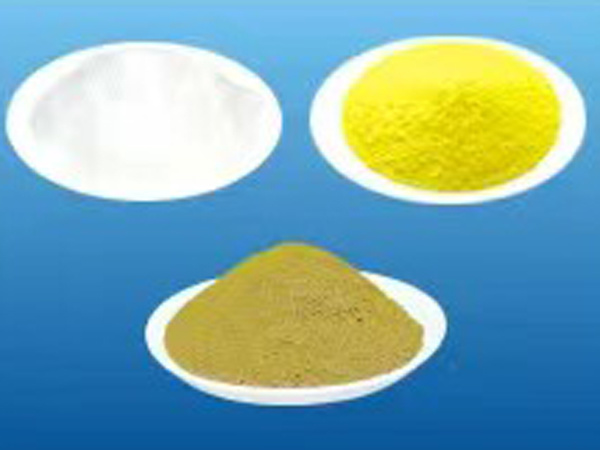
Polyaluminum chloride, or PAC, is a cationic inorganic polymer flocculant consisting of multiple hydroxyl groups and multinuclear complexes. The solid product appears as a pale yellow color. Its key features include significant water purification effects, rapid flocculation and sedimentation, high activity, and no need for alkaline additives. It is effective across a wide pH range, exhibits low corrosivity to pipeline equipment, and can effectively remove color, suspended solids (SS), COD, BOD, and heavy metal ions such as arsenic and mercury from water. This product is widely used in the treatment of drinking water, industrial water supply, and wastewater in various industries.
Keywords:
Newest Products
Latest News
Address: Group 6, Shuidi River Village, Beigou Town, Gongyi City, Henan Province.
Phone: +86 18695835889 / +86 15517588719
Scan the QR code to add us on WeChat.